Sea Grant Network Strengthens U.S. Seafood Safety Nationwide
August 3, 2026
Authored by SGA Program Mission Committee
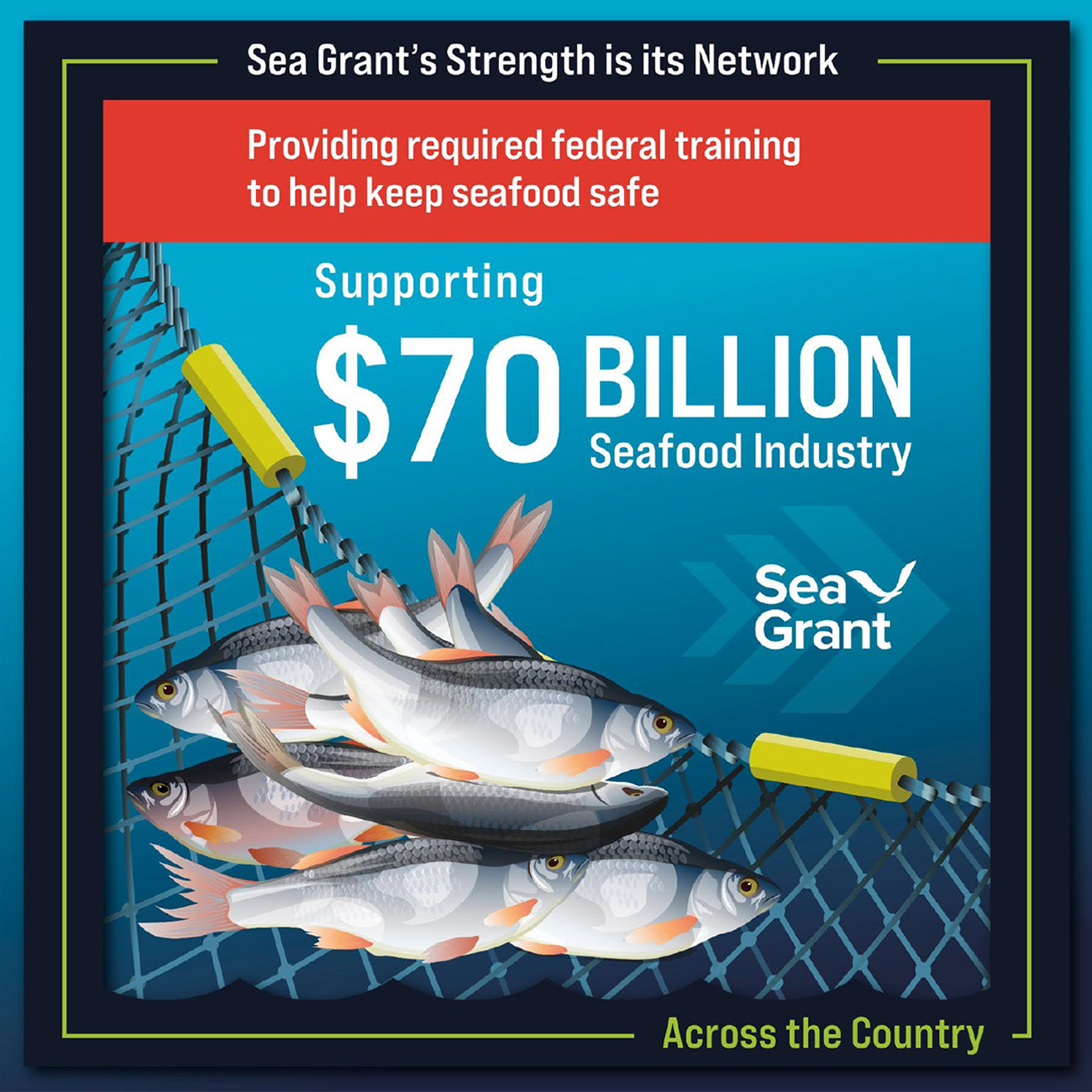
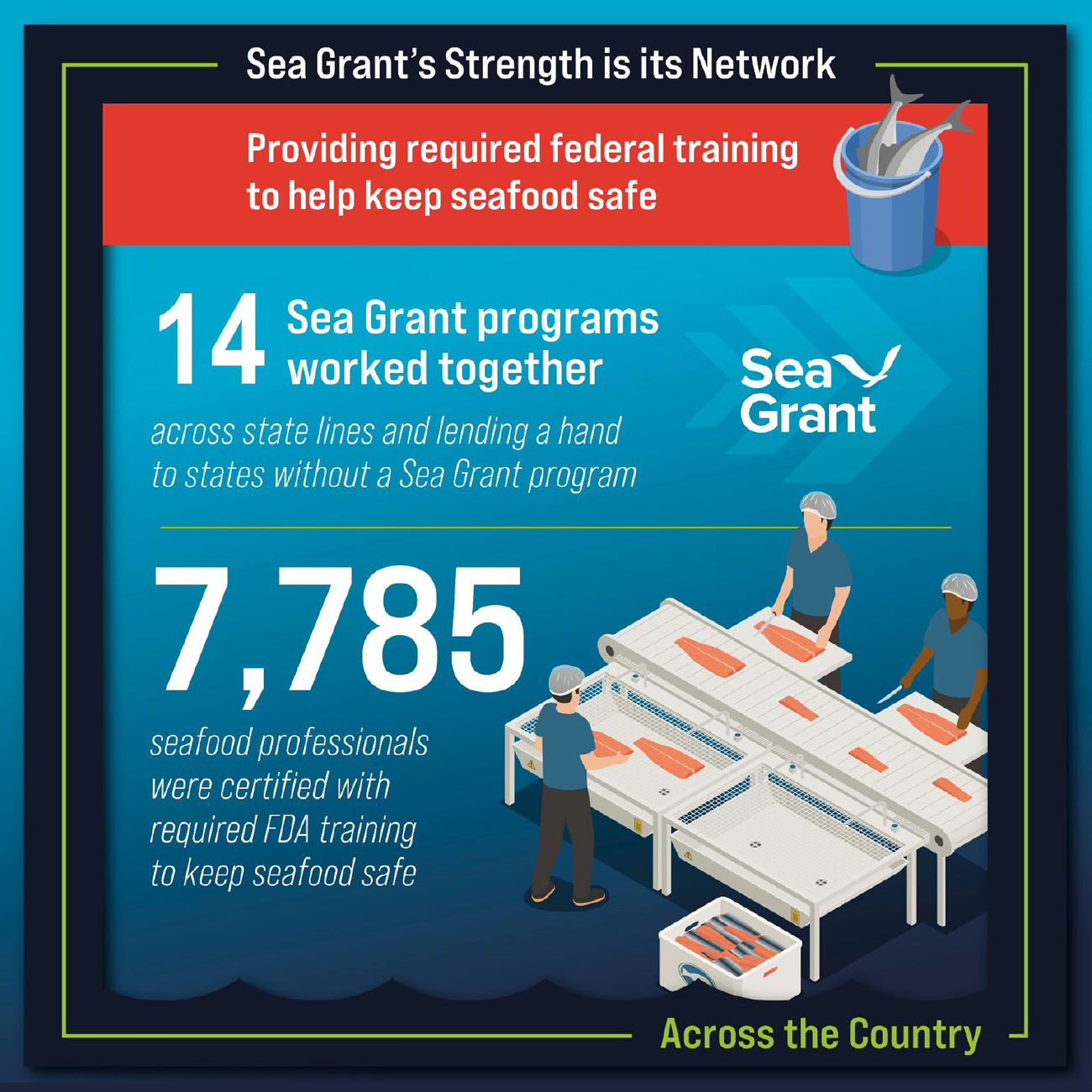
Over the past five years, Sea Grant seafood specialists from 14 programs have collaborated to support the $70 billion U.S. seafood industry by delivering Hazard Analysis Critical Control Point (HACCP) training. By translating complex FDA requirements into practical, hands-on certification programs, Sea Grant has helped 7,785 processors, wholesalers, dock owners, and other seafood professionals maintain the federal compliance required for market access. Without this locally delivered, university-based training, many small- and medium-sized businesses would face prohibitively high consulting costs or risk regulatory closure. This technical assistance functions as an economic stabilizer, enabling the industry to participate in interstate commerce and international export markets with a strong scientific and regulatory foundation.
Sea Grant seafood specialists work across the national network to expand access to HACCP training, offering training in states without a certified specialist—such as Oregon—and serving states without a Sea Grant program, including Oklahoma. They also collaborate to develop training for emerging products, such as seaweed, that are not fully addressed in existing HACCP training.
Beyond regulatory compliance, these efforts promote a proactive culture of food safety that protects public health and strengthens consumer confidence. By shifting the industry from a reactive, inspection-driven model to a prevention-based approach, Sea Grant equips stakeholders to identify and control biological, chemical, and physical hazards well before products reach consumers. This sustained engagement raises the professional standards of the coastal workforce and enhances the reputation of U.S. seafood—such as Gulf shrimp and blue crab—as a high-quality, rigorously verified product in an increasingly competitive global marketplace.